
Why Combining Endoscopic Sleeve Gastroplasty (ESG) and GLP-1 Therapy Is a Game-Changer
Discover how combining Endoscopic Sleeve Gastroplasty (ESG) with GLP-1 therapy maximizes weight loss for lasting, non-surgical results.

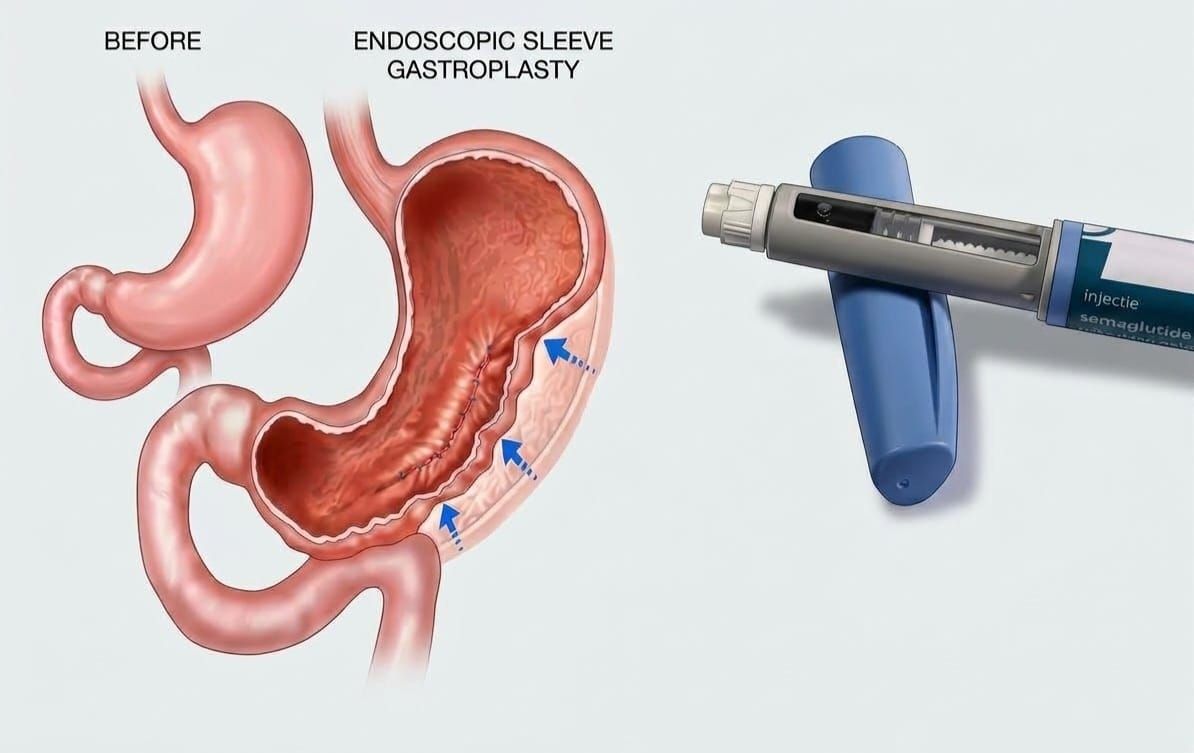
When tackling obesity, relying solely on a single approach—whether biological or anatomical—can sometimes present challenges. Patients undergoing bariatric or endoscopic procedures may face plateaus, insufficient weight loss, or weight regain.
Today, an exciting frontier in metabolic medicine offers a compelling ultra minimally invasive solution: combining Endoscopic Sleeve Gastroplasty (ESG) with GLP-1 receptor agonists. By merging anatomical volume reduction with hormonal appetite regulation, this dual approach delivers a powerful anatomical and chemical reset for sustained, long-term weight management.
The Science Behind the Synergy: Dual-Action Power
Why does combining ESG with GLP-1 medications work so well? Effective treatment of metabolic disease requires addressing two primary drivers of weight: stomach capacity and the biological signals that govern hunger.
- Stomach Restriction (ESG): ESG is a scarless, minimally invasive endoscopic procedure that reduces the stomach’s active volume using an endoscopic suturing device. By fashioning the stomach into a smaller tubular sleeve, ESG creates a physical restriction that limits portion sizes without tissue removal or altering intestinal anatomy.
- Hormonal and Metabolic Control (GLP-1 RAs): GLP-1 receptor agonists (such as semaglutide or liraglutide) and dual GIP/GLP-1 agonists (such as tirzepatide) target neural and hormonal pathways in the body. They slow stomach emptying, improve glucose metabolism and insulin sensitivity, and act on brain signals to significantly quiet "food noise" and boost satiety.
Furthermore, unlike traditional surgical gastrectomy, ESG reduces stomach volume while leaving the stomach’s upper portion (the fundus) intact. Because the fundus remains in place, the production of ghrelin—the body’s natural hunger hormone—is preserved, meaning appetite signals can still remain active. Adding GLP-1 therapy directly counteracts this biological driver by regulating appetite center signals, making it significantly easier to sustain healthy dietary choices and prevent weight regain over time.
What the Clinical Evidence Shows
Recent clinical studies published in metabolic and endocrinology literature highlight the efficacy of pairing endoscopic suturing with GLP-1 therapy:
- Superior Total Body Weight Loss (%TWL): While ESG monotherapy typically achieves a total body weight loss ranging between 15% and 20.5%, introducing GLP-1 receptor agonists boosts outcomes significantly. Clinical data show that patients receiving combined therapy achieve between 20.27% and 24.72% TWL. For instance, a 2024 study by Jirapinyo et al. demonstrated that patients on combined endoscopic remodeling and GLP-1 therapy reached 23.7% TWL at 12 months, compared to 17.3% with endoscopic intervention alone.
- Optimal Timing Matters: Research indicates that starting GLP-1 medications early—either concurrently, during the initial post-procedure period (within 6 months), or directly as weight loss slows—maximizes total weight loss outcomes and helps sustain the peak weight-loss phase.
- Enhanced Metabolic Benefits: Beyond weight reduction, adding GLP-1 therapy yields greater glycemic control. Studies report supplementary reductions in HbA1c levels alongside improvements in overall cardiovascular and metabolic profile markers.
- Outperforming Non-GLP-1 Options: While non-GLP-1 medications (such as phentermine, topiramate, or bupropion/naltrexone) offer modest adjunct benefits (14.2%–18.0% TWL), they lack the consistent, pronounced weight-loss enhancement demonstrated by GLP-1 RAs.
Key Advantages of Combined ESG + GLP-1 Therapy
- Scarless Alternative to Surgery: Performed entirely through the mouth via endoscope under general anaesthesia, ESG requires no external incisions, leading to minimal downtime (often as a day case), less discomfort, and reduced risk of surgical complications compared to conventional bariatric surgeries.
- Comprehensive Hunger Control: Addresses both mechanical fullness (stomach capacity) and biological appetite (brain hunger signals).
- Reduced Risk of Weight Regain: Biological counter-regulatory mechanisms that cause weight plateaus or recurrence after primary procedures are effectively managed by ongoing GLP-1 therapy.
- Reversible and Flexible: The non-resective nature of ESG provides long-term flexibility and peace of mind while accommodating step-wise medical adjustments.
Is This Approach Right for You?
Combining ESG with GLP-1 therapy is ideal for:
- Individuals with a Body Mass Index (BMI) 30, or a BMI 27 accompanied by weight-related medical conditions (e.g., type 2 diabetes, hypertension, fatty liver disease, sleep apnea).
- Patients seeking substantial weight loss comparable to bariatric surgery without undergoing invasive surgical anatomical resections.
- Individuals who have experienced a weight-loss plateau or weight regain following prior weight loss efforts or endoscopic procedures.
Take the Next Step for Your Health
Obesity is a complex, chronic biological disease that often benefits from a multi-targeted approach. By combining the non-surgical restriction of Endoscopic Sleeve Gastroplasty with GLP-1 medical therapy, you get the benefit of both mechanical and hormonal support for lasting weight management.
Consult with a weight management specialist to discover whether a personalized ESG and GLP-1 treatment plan is the right path forward for your long-term health journey.
Evidence Strength: This review synthesizes direct real-world cohort and clinical study data evaluating endoscopic sleeve gastroplasty paired with anti-obesity pharmacotherapy (including GLP-1 RAs and dual GIP/GLP-1 agonists) alongside multi-center bariatric outcome registries, double-blind randomized controlled trials, and meta-analyses evaluated via an evidence-weighted narrative framework. Final Rating: ★★★☆☆
Source: Read the full study


