
Pharmacotherapy
What to Expect When Starting a GLP-1 for Weight Management
Considering a GLP-1 for weight loss? Read real patient perspectives on its effects, silencing food noise, and what to truly expect.

Pharmacotherapy
Considering a GLP-1 for weight loss? Read real patient perspectives on its effects, silencing food noise, and what to truly expect.
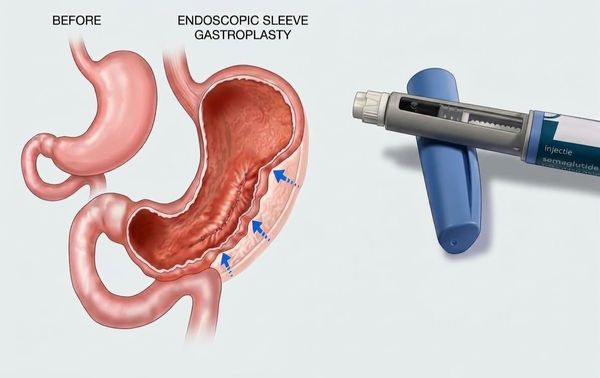
Bariatric Endoscopy
Discover how combining Endoscopic Sleeve Gastroplasty (ESG) with GLP-1 therapy maximizes weight loss for lasting, non-surgical results.

Pharmacotherapy
Learn how to preserve muscle mass on GLP-1s in Singapore with practical protein, exercise, and diet tips tailored for your weight loss journey.

Pharmacotherapy
Finding out that your liver panel blood test and ultrasound scan point toward a fatty liver can be an unexpected and alarming shock. It’s completely normal to feel anxious when medical reports flag something new. However, before you assume the worst, here is the ground reality: Your liver is

Pharmacotherapy
Clinician's Perspective: • Users of GLP-1 receptor agonists may experience a three-fold higher risk of hair, however, the overall incidence is still very low. • Research into Semaglutide reveals that hair loss is rarely reported at the lower doses (0.25mg to 2mg) typically used for diabetes, but

Pharmacotherapy
Clinician's Perspective: • In Singapore, it is estimated that 12.7% of the population has a BMI of 30 or higher, a significant 22.8% of residents fall into the high-risk category (BMI ≥27.5) due to the higher risk of cardiovascular disease in Asian populations. • Healthy diet

Pharmacotherapy
Clinician's Perspective: • Semaglutide is a GLP-1 (Glucagon-like Peptide-1) receptor agonist that mimics a natural hormone to regulate appetite and improve insulin secretion, making it a cornerstone therapy for both Type 2 Diabetes and chronic weight management. • Weight Reduction: Participants using 2.4 mg of Semaglutide

Pharmacotherapy
Clinician's Perspective: • Tirzepatide is a medication that targets two distinct hormone receptors: the Glucagon-like Peptide-1 (GLP-1) and the Glucose-dependent Insulinotropic Polypeptide (GIP). As a result, the stomach emptying is slowed down and appetite is reduced. • Dose-Dependent Weight Loss: Across clinical trials lasting 72

Pharmacotherapy
Clinician's Perspective: • Researchers identified a specific genetic variant in the GLP1R gene (GLP-1 receptor) (the primary cellular docking site for these drugs) that directly influences how much weight a person loses. • Individuals carrying a specific version of this gene (rs10305420) experienced an additional 0.76 kg of

Pharmacotherapy
Clinician's Perspective: • Modern anti-obesity medications (AOM) function by modulating central appetite signaling, delaying gastric emptying, or inhibiting lipid absorption in the gastrointestinal tract. • In Singapore, typical medical criterion for AOM treatment include a Body Mass Index (BMI) of 27.5 or higher in the presence of weight-

Pharmacotherapy
Clinician's Perspective: • Hormonal Mimicry: GLP-1 agonists function by mimicking the Glucagon-like peptide-1 hormone, a naturally occurring substance produced in the small intestine that regulates insulin and satiety (the feeling of fullness). • Glucose Modulation: These agents trigger insulin release and block glucagon secretion, effectively preventing blood

Pharmacotherapy
Clinician's Perspective: • Combined Potency: Bupropion combined with Naltrexone demonstrated superior weight reduction compared to Bupropion monotherapy (the use of a single drug). • Absolute Weight Loss: The meta-analysis, involving over 22,000 participants, revealed a mean weight reduction of 3.67 kg across the intervention groups compared to