More Than Just Weight Loss: How Treating Obesity Protects Against Cancer
Discover how bariatric surgery and weight management medications may reduce the risk of obesity-related cancers, and what experts recommend.


Beyond its well-known impact on diabetes, high blood pressure, and joint health, carrying excess weight is an established risk factor for cancer. Obesity causes chronic low-grade inflammation, altered hormone levels, and insulin resistance, which can encourage tumor growth.
A position statement from the International Federation for the Surgery and Other Therapies for Obesity (IFSO) evaluated the latest international evidence to examine how Metabolic Bariatric Surgery (MBS) affects cancer incidence.
Cancers Reduced After Bariatric Surgery
The IFSO review found that bariatric surgery is associated with a lower risk of several obesity-related cancers. The protective effect is most consistent for hormone-sensitive malignancies and specific gastrointestinal cancers:
- Endometrial (Womb) Cancer: Risk is reduced by approximately 43% (adjusted HR 0.57). Excess estrogen produced by fat tissue strongly drives endometrial cancer; reversing this through substantial weight loss offers significant protection.
- Ovarian Cancer: Risk is reduced by approximately 47% (adjusted HR 0.53).
- Breast Cancer: Overall breast cancer risk is reduced by about 12% (adjusted HR 0.88).
- Colorectal (Colon) Cancer: Risk is reduced by roughly 28% (adjusted HR 0.72).
- Liver Cancer: Risk is reduced by about 31% (adjusted HR 0.69), likely driven by improvements in fatty liver disease and insulin sensitivity post-surgery.
- Melanoma (Skin Cancer): Studies showed a lower incidence (adjusted HR 0.57), though based on a smaller evidence based.
Cancers NOT Reduced After Bariatric Surgery
Bariatric surgery does not reduce the risk of all cancer types. For several anatomical sites, the evidence showed no statistically significant reduction, or even pointed toward a potential increase in reported cases:
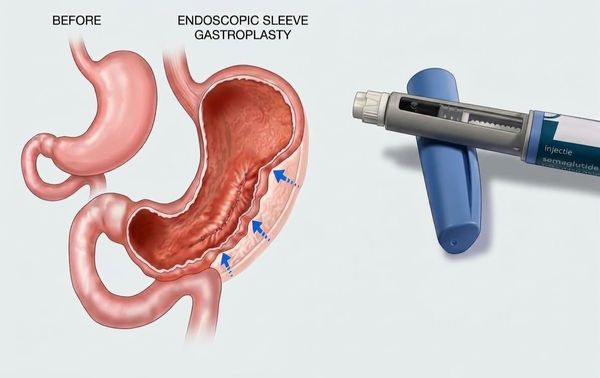
- Esophageal and Gastric (Stomach) Cancers: Showed no statistically significant risk reduction. Point estimates actually favored non-surgical controls (adjusted HR 1.55 for esophageal and 1.71 for gastric cancer). This is partly due to how different procedures alter gut anatomy; for instance, Laparoscopic Sleeve Gastrectomy (LSG) can sometimes worsen acid reflux, whereas Roux-en-Y Gastric Bypass (RYGB) tends to protect against reflux.
- Pancreatic, Gallbladder, Kidney, and Thyroid Cancers: Showed no statistically significant overall risk reduction after surgery.
- Multiple Myeloma: Showed no statistically significant reduction in high-quality matched studies.
- Prostate Cancer: Analyses indicated a statistically significant increase in recorded prostate cancer cases after surgery (adjusted HR 1.56). However, researchers emphasize this may be influenced by increased medical surveillance after surgery rather than a direct biological cause, requiring further research.
How Bariatric Surgery Compares to Medications (Semaglutide & Tirzepatide)
Modern Obesity Management Medications (OMMs)—particularly incretin-based GLP-1 receptor agonists like semaglutide and dual GLP-1/GIP agonists like tirzepatide—have changed how obesity is treated.
- Sustained Weight Loss as the Main Driver: Emerging observational evidence suggests that medications like semaglutide is associated with reduced breast cancer incidence.
- Weight Reduction vs. Modality: Durable weight loss itself is the primary mediator of reduced cancer risk, regardless of whether it is achieved surgically or pharmacologically.
- Key Differences: While bariatric surgery provides decades of proven long-term data, medication comparisons are based on newer, shorter-term observational data. Furthermore, while surgery alters gastrointestinal anatomy and local reflux pathways, medications do not physically reshape the digestive tract.
The Bottom Line for Singaporeans: Tailored Weight Management
Although the sustained weight loss from bariatric surgery can lower the risk of certain cancers, cancer prevention should not be the sole reason for undergoing the procedure.
If you are managing obesity, sustained weight loss through structured medical programs, medications, or bariatric surgery may lower your risk for some types of cancer.
Ultimately, one should choose specific procedures (e.g., Sleeve Gastrectomy vs. Gastric Bypass) by carefully weighing individual risk factors, particularly upper gastrointestinal conditions like severe reflux disease. Treatment should be chosen based on your overall metabolic health—and undergoing weight-loss therapy does not replace proven health screenings such as mammograms or colonoscopies or cancer treatments.
Navigating obesity treatments and understanding your personal cancer risk can feel overwhelming, but you do not have to do it alone. Find out more from weight management doctors in Singapore, who can help you weigh the benefits of surgery versus modern medications and create a personalized, long-term plan for your health.
Evidence Strength: This position statement utilizes the GRADE (Grading of Recommendations, Assessment, Development, and Evaluations) methodology to appraise the available evidence. All current data is derived from observational and retrospective cohort studies, which carry a risk of selection bias, residual confounding, and inconsistency. Consequently, recommendations regarding bariatric surgery for cancer prevention are classified as "conditional". Final Rating: ★★★☆☆
Source: Read the full study