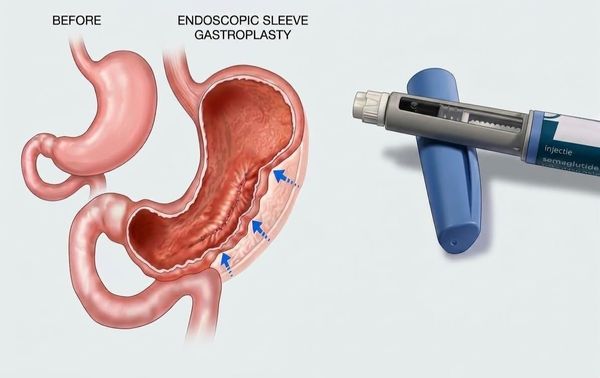
What is Revisional Bariatric Surgery?


Clinician's Perspective:
• Between 7% and 15% of patients who undergo an initial weight-loss procedure will require a revisional surgery during their lifetime.
• In patients who have had bariatric surgery before, they may qualify for revisional bariatric surgery if they experience significant weight regain, inadequate initial weight loss, or complications such as Gastroesophageal Reflux Disease or Gastric Ulcers.
• For revisional bariatric surgery, 70% of revision patients maintain a loss of around 10% of their weight after the intervention.
• A common revisional strategy involves converting a Sleeve Gastrectomy into a Gastric Bypass.
Bariatric surgery is a potent intervention for metabolic health, yet it is not always a one-time event. Revisional Bariatric Surgery serves as a critical secondary phase for a minority of patients—approximately 7% to 15% of the total cohort.
Reasons For Revisional Surgery
The primary driver for revision is often the failure to achieve sufficient weight-loss. While individual goals vary, losing less than 15% of total body weight from the initial bariatric surgery may signal the need for a secondary intervention. This lack of progress can stem from biological factors or anatomical changes, such as the stretching of a stomach pouch over time, leading to increased food intake.
Beyond weight management, revisional surgery is a necessary tool for addressing post-operative complications. For instance, patients who initially underwent a Sleeve Gastrectomy may develop severe Gastroesophageal Reflux Disease (GERD, or chronic acid reflux). Other mechanical issues addressed in revisional surgery may include gastric band erosion or the development of strictures (the narrowing of the connection between the stomach and intestine).
Revisional Bariatric Surgery
Surgical revision involves re-entering the abdominal cavity to physically alter the previous surgical site. It is usually performed laparoscopically (keyhole surgery).
A typical revisional surgery involves the conversion of a sleeve gastrectomy into a Roux-en-Y bypass.
While highly effective for weight loss, surgical revisions are technically demanding due to the presence of adhesions (bands of scar tissue that bind internal organs together) and altered anatomy.
Patient Outcomes
Success in revision surgery is defined by the resolution of obesity-related co-morbidities and the percentage of Total Body Weight Loss.
70% of revision patients maintain a loss of around 10% of their weight after the intervention. It is important to note that patients are less likely to lose the same percentage of weight as they might have during a successful primary surgery.
Overall, patients often experience significant improvements in obesity-related conditions, such as the remission of Type 2 Diabetes and the improvement of Obstructive Sleep Apnea (a condition where breathing repeatedly stops and starts during sleep). Furthermore, quality of life often improves after surgery.
Risks and Recovery
The decision to undergo revision is balanced against an acceptable, but higher complication rate compared to primary surgery. Surgical risks include anastomotic leakage, bleeding, injury to the organs inside the abdomen, and the need to perform open surgery. There is an increased likelihood of Dumping Syndrome (a condition where food moves too quickly from the stomach into the small intestine, causing nausea and dizziness).
Patients must adhere to a strict dietary transition. This involves a clear liquid phase, transitioning to pureed foods, and eventually graduating to soft solids over a six to eight week period. This structured approach is vital to ensure healing.
Overall, when performed by a highly experienced specialist bariatric surgeon, revisional bariatric surgery is an effective and safe treatment.
Curious about your metabolic journey? Check out our interactive educational tool to estimate your projected weight loss.